
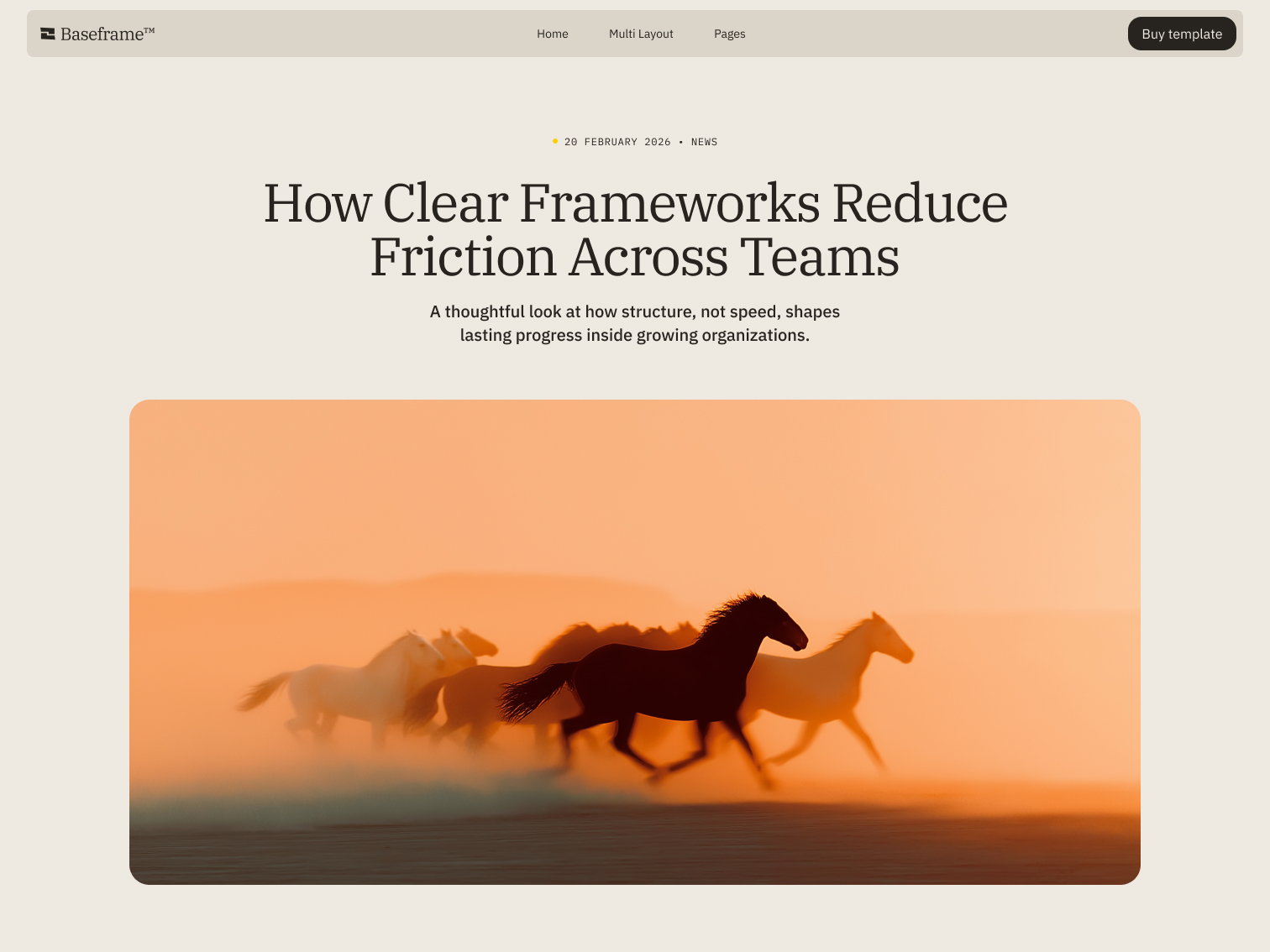


How Clear Frameworks Reduce Friction Across Teams
Belonging as brand strategy: how the Feminine Everyman archetype turns the everyday into loyalty.

The Feminine Everyman Archetype turns ordinary moments into quiet rituals of care. A seat saved at the table. A text to check in. A casserole delivered at exactly the right time.
Where other archetypes reach for the extraordinary, she dignifies the everyday. She doesn't ask people to become someone else to belong. She builds belonging first, and lets confidence grow inside it.
In branding, this archetype isn't “basic” or “plain.” It's relatable excellence. It's the feeling of being welcomed without being sold to. It's trust built through consistency, humility, and human warmth.
When the Feminine Everyman is done well, your audience feels: I can exhale here. I am understood. I can be myself.
Origins and Frameworks: Belonging, Reliability, and Shared Rituals
The Everyman as a Psychological Pattern
The Everyman archetype is widely understood as the relatable, down-to-earth figure who values humility, fairness, and belonging. It tends to reject elitism in favour of connection and shared experience. This is a helpful lens for brands because most customers don't want to be “marketed at.” They want to be seen. They want to feel safe making a choice.
The Hierophant: Community, Customs, Continuity
In tarot, The Hierophant is often associated with tradition, institutions, shared beliefs, and the wisdom of community. For the Feminine Everyman, this isn't about rigid rules. It's about the comfort of familiar rituals and values, the power of “we do things this way because we take care of each other.”
The Shadow: Conformity That Erases the Self
The caution here is when belonging becomes compliance, when fitting in becomes a requirement to shrink. Tarot often frames The Devil as a symbol of attachment and restriction, a useful metaphor for that kind of social pressure. Brand translation: your community should feel welcoming, not controlling. Clear values are good. Gatekeeping is not.
Cultural Examples: Three Expressions of Everyday Belonging
Jane Jacobs (neighbourhoods as living ecosystems): known for arguing that cities thrive when planning prioritises real human life, the needs and experiences of residents, street-level vitality, and the social fabric of neighbourhoods. Her Everyman gift was respect for ordinary people, not as a demographic, but as the heartbeat of a place. If you want loyalty, design for real life, not a perfect lifestyle fantasy.
Nora Ephron (humour and tenderness in the mundane): became known for romantic comedies and writing that made daily life feel specific, funny, and emotionally true. The Feminine Everyman voice can be warm, witty, and real. It wins with honesty, not grand declarations.
Dolly Parton (generosity that feels approachable): her Imagination Library is a book-gifting program that mails free books to children from birth to age five in participating areas. You can lead with generosity without feeling performative when your actions are consistent and grounded in service.
Sensory and Aesthetic Mapping
This archetype isn't glossy. It's textured. Lived in. Human.
Sight
Handwritten notes on the fridge, mismatched plates and communal tables, soft natural light and imperfect beauty
Sound
Kettle whistle, screen doors, Sunday chatter that spills into the hallway
Touch
Knitted throws, stone countertops, paperback spines and worn denim
Smell
Cinnamon toast, fresh laundry, tomato soup simmering
Feeling
Welcomed, understood, at home
Brand Applications: How This Archetype Shows Up in a Visual Identity System
1. Positioning: “For People Like Us”
The Feminine Everyman brand promise is rarely “the best.” It's “the most trusted.” It often sounds like: easy to choose, made for real life, built to last, fair, clear, dependable. The goal isn't to impress. It's to include.
2. Messaging: Clarity, Warmth, Respect
This archetype speaks in plain language and keeps its promises small and true. It avoids dramatic claims and instead highlights what to expect, what it costs, how it works, and what happens if something goes wrong. When in doubt, write like you're talking to someone you genuinely like.
3. Visual Design: Approachable, Consistent, Quietly Elevated
Look for friendly type choices and generous spacing, photography that feels candid and lived in, warm neutrals and soft contrasts, and layout systems that prioritise ease and readability. The Feminine Everyman is “designed,” but it doesn't feel designed at the expense of humanity.
4. Community Cues: Make the Customer Feel Like a Regular
The Everyman brand experience should reduce friction and increase comfort: welcoming microcopy, clear wayfinding, simple onboarding, thoughtful follow-ups. A good test: does your website feel like a host, or a bouncer?
Brand Examples: Everyday Grace in the Wild
IKEA (democratic design for everyday life): describes “Democratic Design” as balancing five dimensions, form, function, quality, sustainability, and low price. Accessibility can be a design principle, not a compromise.
Everlane (trust through clarity): frames “Radical Transparency” as revealing true costs across materials, labour, and transportation. Fairness and clarity can be the brand story.
Nextdoor and Buy Nothing (belonging as the product): Nextdoor's mission is to make every neighbourhood feel like home by connecting neighbours to local people, places, and information; Buy Nothing describes itself as a community for giving and getting stuff, completely for free. Community platforms succeed when they feel like a shared living room, not a marketplace.
Common Pitfalls (and How to Avoid Them)
“Relatable” becomes generic: use specific details, local language, real scenarios.
Warmth without standards: pair friendliness with reliability. Be kind and competent.
Community that quietly excludes: design for inclusion. Make the values clear, and keep the culture spacious.
Where the Everyman Sits Next to Other Archetypes
The Feminine Everyman isn't chasing what the Hero, Lover, or Sage are built around: exceptionalism, desire, or authority. She's building something else entirely, the kind of trust that doesn't need to prove itself. If you're weighing this archetype against another, it's worth reading how each of those three handle belonging differently.
If your vision is authentic, people-first branding, the Feminine Everyman Archetype can turn daily moments into lasting loyalty. If you're rebranding and want to feel more human, more trusted, and more inviting, this is a strong place to start.
Get in touch and let's find out if this is your archetype.