


Pages
Get full access to Figma after the purchase
Buy
Brand materials

A brand that lives in a guidelines document is not doing its job.

Most companies that have invested in a brand identity reach the same point: the strategy is clear, the identity is well-designed, and the guidelines are thorough. But the materials the team actually uses every day — the decks, the proposals, the case studies, the one-pagers, the sales tools — still look like they came from five different studios in five different years.

Brand materials are how your identity stops being a document and starts being a practice. We design the templates, tools, and collateral that put your brand to work across the moments that matter most to your business.

Four business professionals sitting across from each other at a conference table in a modern office setting.
Cozy wooden armchair with beige cushions and a brown pillow near large glass windows overlooking a green forest.
Various smooth wooden blocks and shapes on display in a workshop with a person blurred in the background.
Blonde woman with light makeup wearing a beige blazer and white top, smiling softly against a neutral background.
Sunlit rolling hills and forested landscape with mist and layers of distant mountains at sunrise.
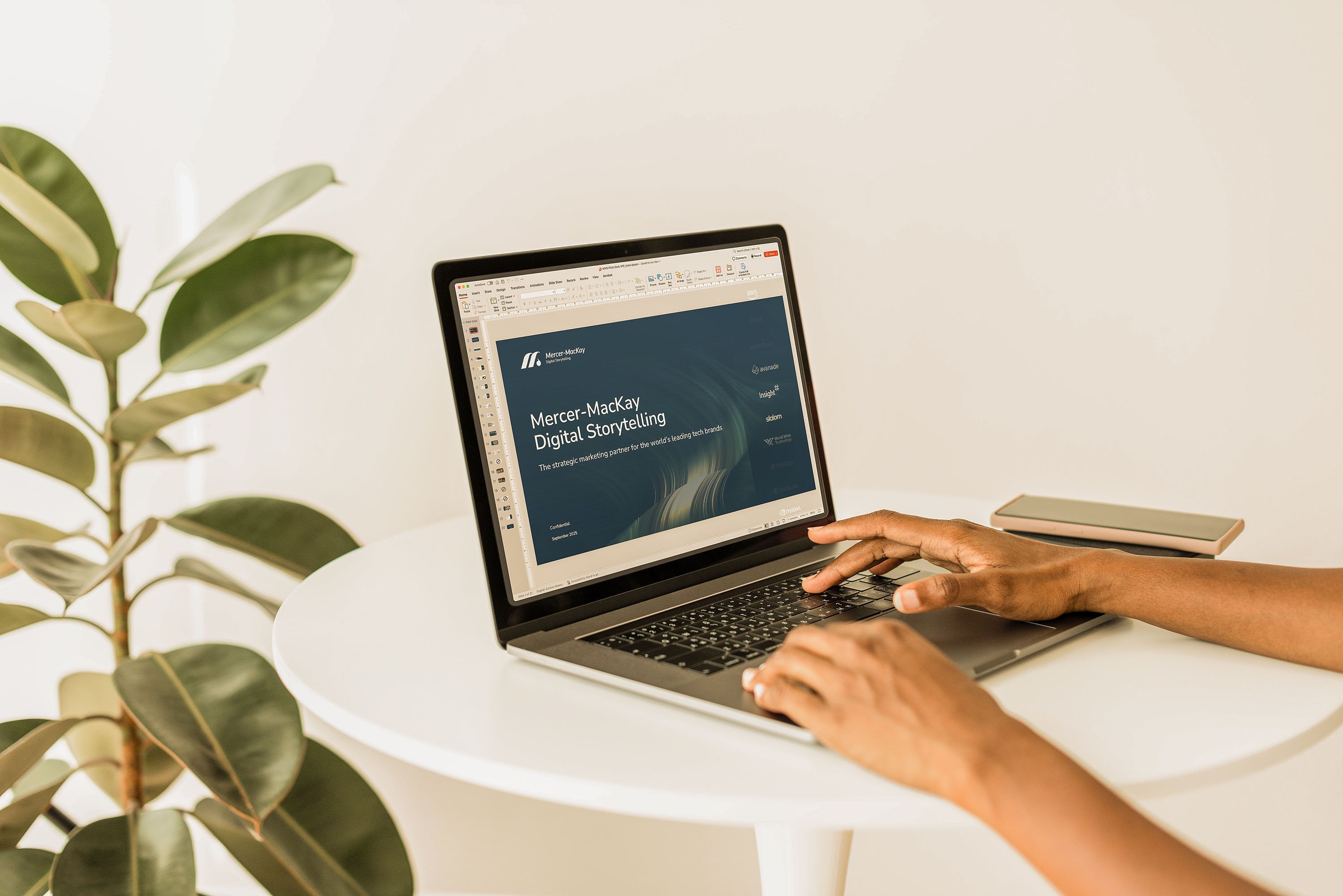
Woman working on a laptop at a desk in a modern office with high windows and pendant lights.
Four business professionals sitting across from each other at a conference table in a modern office setting.
Cozy wooden armchair with beige cushions and a brown pillow near large glass windows overlooking a green forest.
Various smooth wooden blocks and shapes on display in a workshop with a person blurred in the background.
Blonde woman with light makeup wearing a beige blazer and white top, smiling softly against a neutral background.
Sunlit rolling hills and forested landscape with mist and layers of distant mountains at sunrise.
Woman working on a laptop at a desk in a modern office with high windows and pendant lights.
everything you brand touches, done with intention

Brand materials are the touchpoints that build trust before you ever speak to a client. Business cards, stationery, branded documents, guidelines, and collateral. Every piece an opportunity to show how seriously you take your brand.

Consistent brands outperform inconsistent ones. Every time.

23
%

average revenue increase when a brand is presented consistently across all platforms
Lucidpress

33
%

increase in revenue attributed to consistent brand presentation across all touchpoints
Forbes

1,000
+

projects completed by saije studio

5 days

average project turnaround at saije studio

You have a brand. Your materials tell a different story.

It tends to happen gradually. A sales deck built before the last rebrand. A case study template created by someone who has since left. A proposal cover that has been edited so many times it barely resembles the original. An email signature that half the team has customized in their own direction.

None of it is catastrophic on its own. But collectively it creates an impression: a company whose outward presentation does not quite match the quality of what it actually delivers. And in competitive situations — a pitch, a procurement process, a first meeting with a major client — that impression costs you.

Brand materials close that gap. Not by constraining your team, but by giving them design they can actually use: thoughtfully built, on-brand, and flexible enough to work across the situations they face every day.
Trusted by
What we design

The materials your team reaches for every day.

Brand materials exist at the intersection of design quality and operational usefulness. Every piece we make is built to be used by real people under real conditions — not admired in a presentation and then abandoned when the deadline arrives.
Sales and marketing collateral
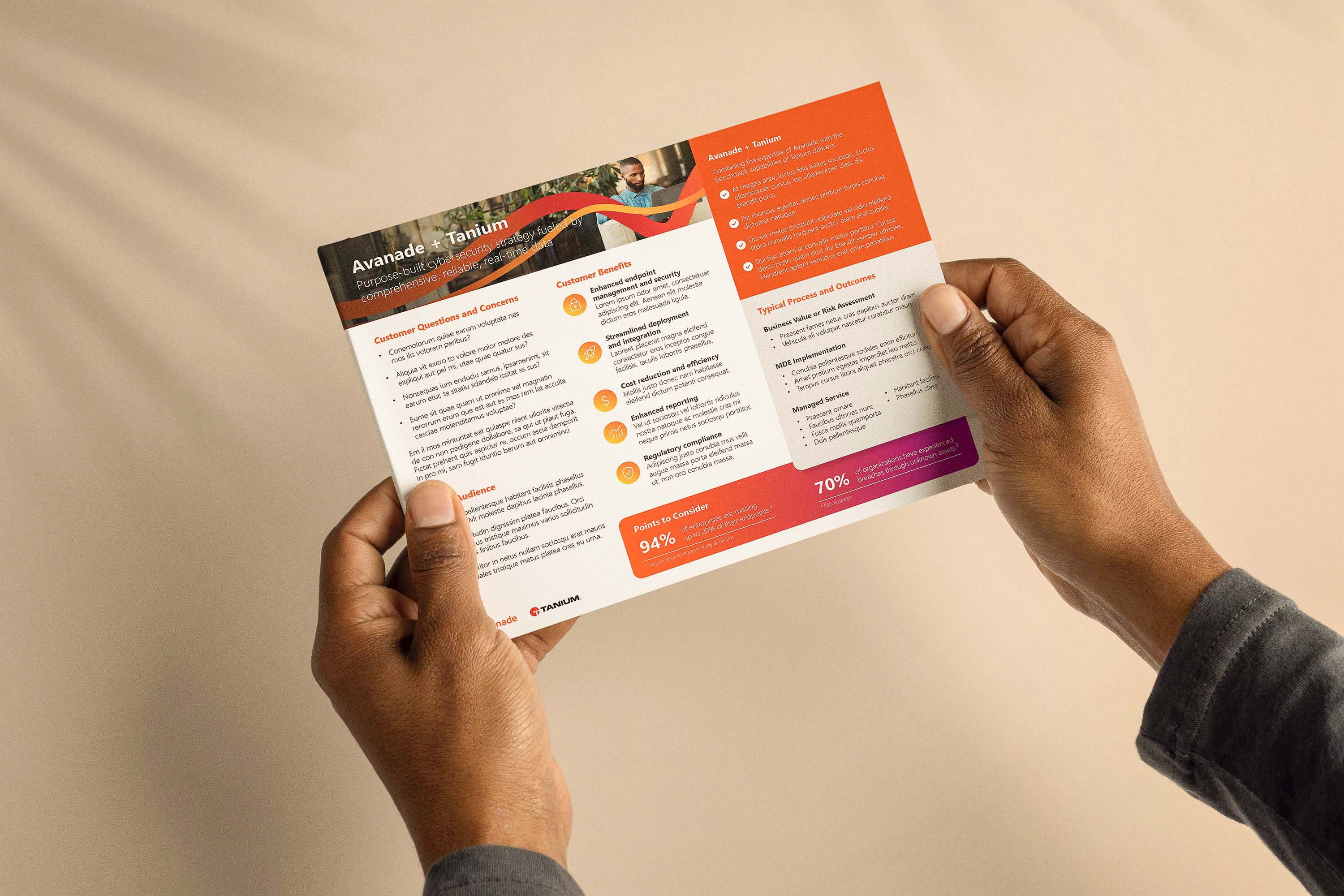
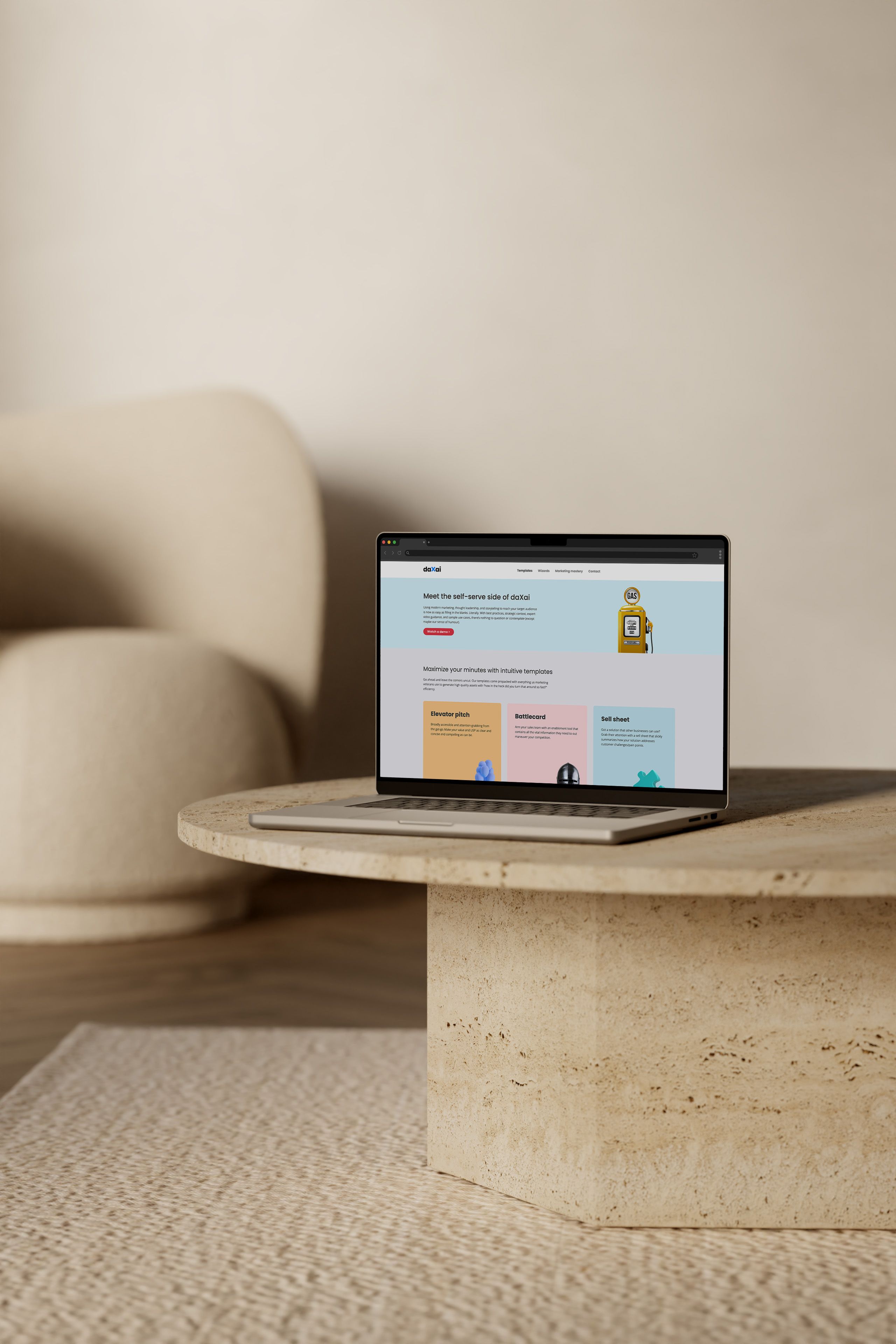
One-pagers, capability documents, solution briefs, and battle cards. Designed to support your sales process at every stage, from initial outreach to the final conversation before a decision is made. Structured for clarity, built within your brand, and formatted so your team can update them without a designer in the room.
Case studies and client stories
The evidence your prospects look for before they say yes. We design case study templates and finished documents that present your outcomes with the same quality as the work they describe. A poorly designed case study undersells a strong result. A well-designed one multiplies it.
Proposal and pitch templates
Branded proposal covers, executive summary pages, scope-of-work layouts, and pricing tables. Built so your team can assemble a polished, consistent proposal quickly — without starting from a blank page or a mismatched template every time.
Report and document templates
Quarterly reports, program summaries, partnership decks, research documents. Long-form materials that need to hold attention, communicate authority, and reflect your brand from first page to last. Designed for screen and print simultaneously where needed.
Brand guidelines and usage documentation
The document that makes everything else work consistently. We design and produce brand guidelines that are clear, usable, and built for the people who actually need to apply them — not just a beautiful PDF that lives unopened in a shared folder. Covers visual identity usage, voice and tone, do-and-don't examples, and template access instructions.
Template systems and design toolkits
Master templates in PowerPoint, Keynote, Google Slides, Canva, or Figma — built so your team can produce on-brand work independently. We design the system and build in guardrails that make it hard to go off-brand, even without a designer involved.
Our philosophy

Systematic without being slow.

We have refined this process across hundreds of projects. You get a direct, low-friction experience from brief to final file.

01 Brand immersion
Before we design a single template, we absorb your brand. Guidelines, existing materials, voice and tone documentation, and any examples of work you consider on-brand (and off-brand). If your guidelines have gaps, we note them. If there are conflicting versions of the brand in circulation, we flag them. This step makes everything else faster and more accurate.
02 Scope and priority
Brand material projects vary widely in scope. We establish exactly which materials are being produced, in what order of priority, and to what timeline. For larger engagements, we often phase delivery so your team has working materials quickly while the full suite is completed.
03 Design and build
We design with the end user in mind from the start. That means building templates that are structurally sound, not just visually correct. You review at a defined checkpoint for each piece or set of pieces.
04 Refine and finalise
Final files delivered in print-ready format: PDF/X, packaged InDesign, or the format your vendor requires. A production notes document accompanies any piece with technical complexity.
05 Handoff and usage guide
Every template system we produce is delivered with a brief usage guide: where to find assets, how to use the template, what to keep and what to customize. This is not an afterthought. It is what makes the difference between materials your team uses and materials that accumulate in a shared drive.
featured case studies

It all starts with happy customers

"Collaborating with Saije has been a transformative experience. Their ability to understand our brand and deliver stunning, effective designs was truly impressive. We couldn't be happier with the results."

Karim Ramji
Chief Operating Officer
faq

Questions we
hear often.

Schedule a free consultation
Do we need to have our brand guidelines finalized before we start?

Not necessarily, but thestronger your brand identity, the more considered the materials we produce. Ifyou have a defined logo, colour palette, and typography system, we can workfrom those even without formal guidelines. If your brand is still evolving, wecan work alongside that process and make decisions that are consistent with thedirection you are heading. We will tell you honestly if we think the brandneeds to be more defined before the materials will reach their full potential.

What formats do you deliver templates in?

We build in the tools your teamactually uses: PowerPoint, Google Slides, Keynote, Canva, Word, Google Docs, InDesign, and Figma are our most common formats. We do not produce a design in one tool and ask your team to port it to another. The format is confirmed at the brief stage.

Can you work with templates we already have and just update them to our new brand?

Yes. We assess what you have, determine what is worth building on and what is better rebuilt from scratch, and produce a clear recommendation before any design work begins. Updating existing templates is often faster and more cost-efficient than starting from nothing, provided the underlying structure is sound.

How do you handle a large volume of materials across multiple deliverables?

We scope larger material suites as a single engagement with a defined deliverable list agreed upfront. For businesses that produce materials at significant ongoing volume, the Creative Partner Plan is the more efficient model: a monthly credit allocation applied across everything you need, with the same team working your account consistently.

Will our team be able to use the templates you build?

Yes. That is the point. Every template we deliver is built with locked design elements and editable content zones, and comes with a usage guide written for non-designers. We test every template with realistic content before delivery. A template that requires design knowledge to update correctly has not been built properly.

What is the difference between brand materials and brand guidelines?

Brand guidelines document the rules: how to use the logo, which colours go where, which typefaces to use and when. Brand materials are the actual designed outputs your team uses day to day: the proposals, the decks, the reports, the one-pagers. Guidelines tell your team what to do. Materials give them something ready to use immediately.

How quickly can we get started?

Onboarding typically takes three to five business days. We use that time to brief the team on your brand, set up your project dashboard, align on turnaround expectations, and confirm your first month's priorities. Most clients have work in production within the first week.

Who will I be working with?

You have a dedicated project manager as your primary point of contact, and a consistent creative team assigned to your account. The same people work your projects month after month. You are not handed off to whoever is available — your team learns your brand and your standards, and that knowledge carries forward into every deliverable.

let’s talk

Your brand should be working for you — in every room, on every desk, in every inbox.

Let's build the materials that make that happen.

Book a call or fill in our project form and we will get back to you within one business day.

hello@saijestudio.com
@saije.studio
@saije.irl
Name
Email
Phone (OPTIONAL)
Message
Thank you! Your submission has been received!
Oops! Something went wrong while submitting the form.