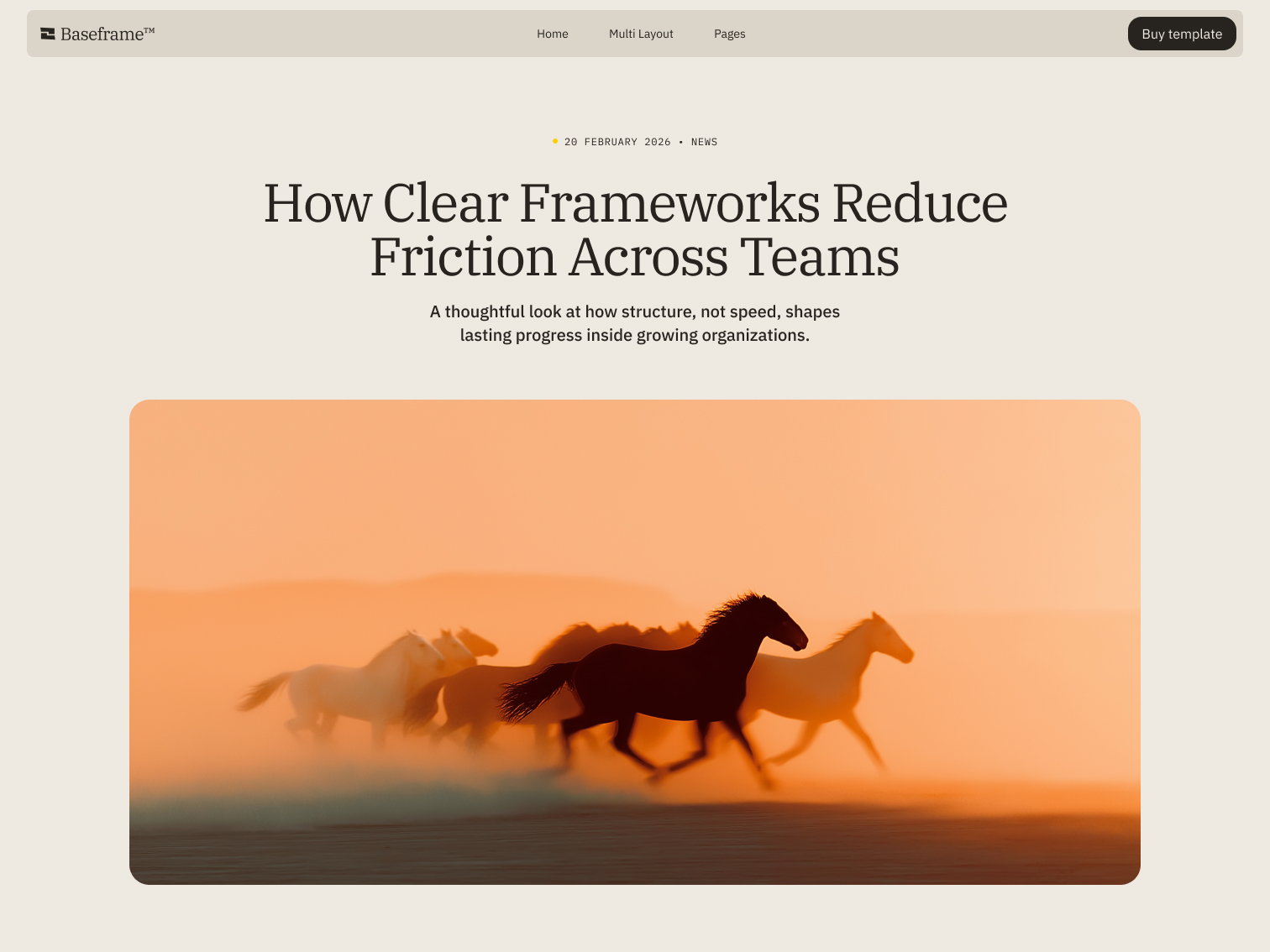


How Clear Frameworks Reduce Friction Across Teams
Freedom as flow: how the Feminine Explorer archetype turns curiosity into brand permission.

The Feminine Explorer Archetype seeks freedom without force.
She's not here to conquer the mountain. She's here to feel the air change as the path rises. She follows curiosity like a compass, and trusts that the right next step will reveal itself once she's moving.
Where the masculine Explorer often charges forward with grit and determination, the feminine Explorer expands through receptivity. She explores by listening. She chooses the route that nourishes, challenges, and quietly changes her.
In branding, this archetype creates a world that feels like an open window. It invites people to breathe deeper, move wider, and remember who they are outside of expectation.
If your audience is craving meaning, spaciousness, self-trust, or a more honest kind of adventure, this archetype may be a strong fit.
Origins and Frameworks: Archetype, Tarot, and Sagittarius
Temperance: Flow, Integration, and Harmony
Temperance is often associated with balance, moderation, patience, and creating harmony by integrating different elements. For brand building, that matters because the Feminine Explorer isn't only about novelty. She's about integration. She takes what she learns on the road and weaves it into who she becomes. This is the difference between a brand that feels scattered and a brand that feels expansive.
Wheel of Fortune: The Journey Isn't Linear
The Wheel of Fortune is commonly read as cycles, change, and the turning of life's seasons. The Feminine Explorer doesn't promise a straight line. She promises movement, and makes room for the fact that growth can look like detours, pauses, and sudden openings. When brands embody this well, they stop trying to look “finished” all the time. They look alive.
Sagittarius as a Symbol of Wide Horizons
Britannica describes Sagittarius as a zodiac sign represented as an archer and associated with a defined period in the zodiac calendar. Here, we're using Sagittarius less as a literal rule set and more as a metaphor: horizon-seeking, meaning-making, and the instinct to keep learning.
Cultural Expressions: Three Feminine Explorers
These examples aren't about perfection. They're mirrors, showing different ways curiosity can look when it becomes a life force.
Amelia Earhart (courage with grace): Britannica notes she was the first woman to fly solo across the Atlantic Ocean, in 1932. There's a distinct Feminine Explorer energy in her story: boldness that still feels elegant and human. Exploration can feel powerful without feeling aggressive.
Freya Stark (discovery through attention): Britannica describes her as a British travel writer known for two dozen personal books about local history, culture, and everyday life, often in remote regions where few Europeans had travelled. Her Explorer signature isn't speed, it's depth. She noticed what many people would miss. The Feminine Explorer wins through observation and meaning, not volume.
Elizabeth Gilbert (self-discovery as cultural invitation): Eat, Pray, Love is widely described as a memoir of travel and self-discovery, published in 2006. Regardless of how someone feels about it, the cultural impact is clear: it gave people language for wanting more than their current life. Curiosity becomes magnetic when you name what people secretly desire.
Sensory and Aesthetic Mapping: What It Looks and Feels Like
The Feminine Explorer is open, tactile, and sunlit, but not overly bright. Think natural movement, lived-in beauty, and honest texture.
Sight
Flowing rivers, vast plains, forest canopy light
Open journals, maps with soft folds, linen layers
Images that feel candid, not posed
Compositions with space to breathe
Sound
Rushing water, birdsong at dawn, footsteps on gravel, soft pages turning
Touch
Linen, canvas, worn leather
Weathered stone and smooth driftwood
Wind through hair, sun on skin
Smell
Fresh rain, wildflowers and crushed herbs, campfire embers, salt air
Feeling
Boundless possibility, gentle courage, grounded independence, inner permission
Brand Applications: How to Translate the Feminine Explorer Into Strategy and Identity
1. Positioning: Freedom That Feels Safe
The Feminine Explorer doesn't sell adrenaline first. She sells permission. Strong positioning here often answers: what does your audience get to do or become once they're with you? Where do they feel more free, more honest, more themselves? What kind of exploration do you enable, physical, emotional, creative, intellectual? Skip this and you risk becoming “travel aesthetic” without a point of view.
2. Messaging: Curious, Calm, Clear
This archetype sounds like an invitation, not a challenge: a question that opens a door, a gentle confidence that doesn't over-explain. Simple language, grounded optimism, reflection without heaviness. A helpful test: does your copy make someone feel expanded after reading it, even for twenty seconds?
3. Visual Identity: Air, Texture, Movement
This is where many brands either shine or slip into sameness. What makes a Feminine Explorer identity feel distinct: typography that feels human and editorial, not harsh; palettes inspired by nature, but with one unexpected accent; photography with real texture and natural light; layouts that use whitespace as calm, not emptiness; subtle motion if digital, slow fades, gentle parallax, scroll moments that feel like discovery.
4. Brand Experience: The Path Matters as Much as the Destination
The Feminine Explorer experience isn't “here's the offer, buy now.” It's “here's the next step, and it feels good to take it.” Onboarding that feels like a guided trail, not a form dump. Content that helps people explore their own needs. Clear choices that reduce overwhelm. Thoughtful pacing so the audience feels supported.
Brand Examples: Exploration With Purpose
Patagonia (adventure with values): its mission statement is commonly shared as “we're in business to save our home planet,” with activism content reinforcing a values-led approach to the outdoors. This is the Feminine Explorer done well: the adventure isn't separate from responsibility.
goop (exploration as “always becoming”): its “what's goop” page frames the brand as helping women in the pursuit of “always becoming,” with curiosity and expansion as core themes. That language sits naturally in the Feminine Explorer world: permission, curiosity, self-led living. Worth noting if you reference this one in your own content: keep claims grounded in brand storytelling, not health or wellness outcomes.
Common Pitfalls When Brands Try to Embody This Archetype
Aesthetic without meaning: pretty nature photos aren't a brand. Fix: define what “freedom” actually means in your category.
Too many directions at once: exploration can become scattered if the brand lacks a centre. Fix: choose a clear point of view, then let curiosity live inside it.
Vague language that sounds like everyone: words like “wander,” “discover,” and “journey” flatten fast. Fix: be specific about the kind of exploration and the transformation it creates.
Does your brand invite people to explore more deeply, or does it rush them to a conclusion? If the answer is “we want to feel more spacious, more honest, more alive,” the Feminine Explorer Archetype might be your compass. A useful next step is to look at your website and ask: where do we give people room to breathe, and where do we accidentally push them?
Get in touch if you want help translating this archetype into a visual identity system and a brand story that feels grounded.