





How Clear Frameworks Reduce Friction Across Teams
Reliability as brand strategy: how the Masculine Everyman archetype turns follow-through into trust.
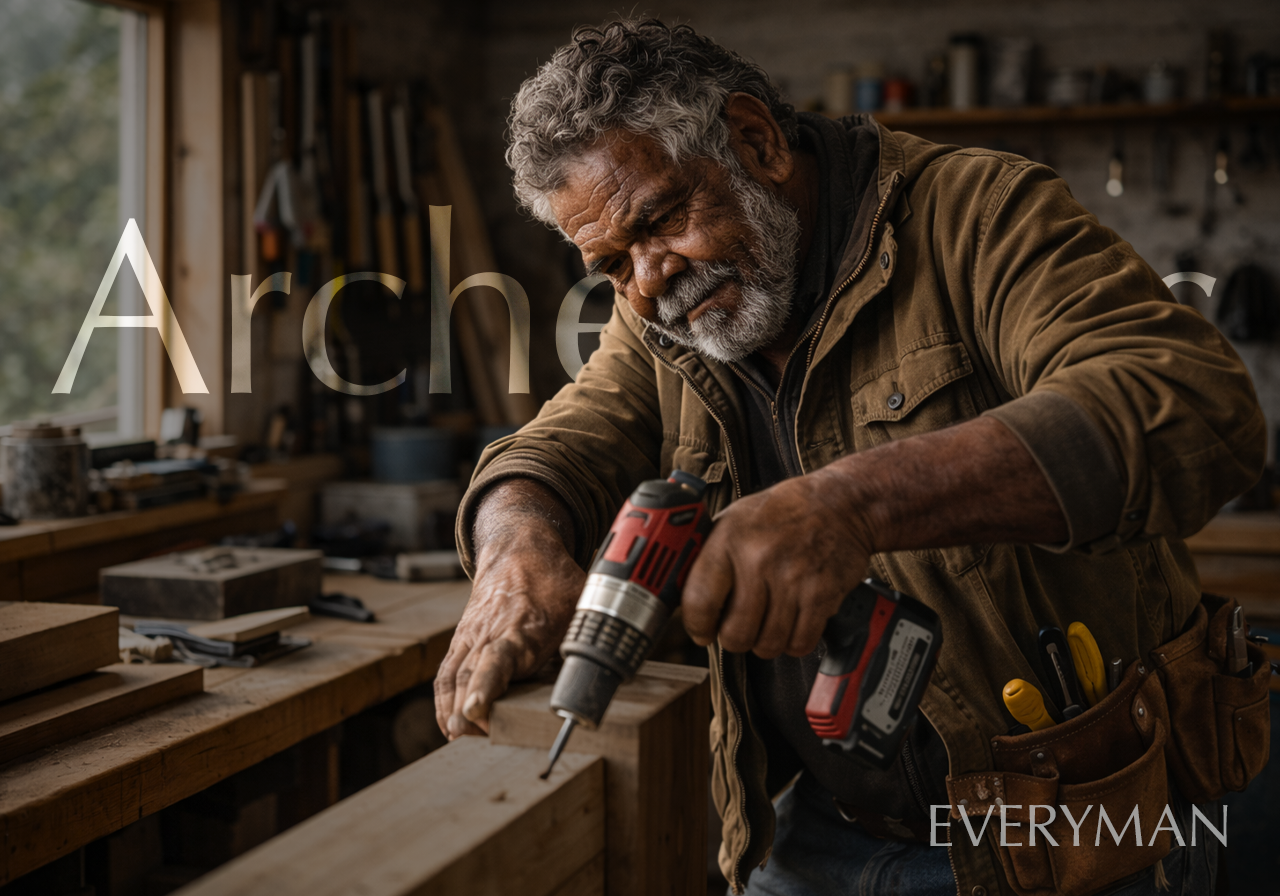
The Masculine Everyman is the neighbour you call when the sink leaks. Competent, calm, and here to help. He shows up. He tells the truth. He fixes the problem without turning it into a performance.
His value isn't flash. It's follow-through.
In branding, this archetype is a relief. It doesn't ask the audience to keep up with a lifestyle. It meets them where they already are and says: you're not behind. You're not too much. Let's make this simpler.
When the Masculine Everyman is done well, your audience feels: I trust this. I understand it. This will work in real life.
Origins and Frameworks: Trust, Craft, and the Shadow of Rigidity
The Hierophant: Shared Standards, Craftsmanship, Community Codes
The Hierophant is often associated with tradition, institutions, shared beliefs, and the value of established systems. It's the archetype of “the way we do things” when that way protects quality and builds continuity. For brand strategy, this is a gift. The Masculine Everyman thrives when expectations are clear, standards are consistent, and the customer feels supported by structure. It isn't about being old-fashioned. It's about being dependable.
The Shadow: When Usefulness Becomes Identity
The Devil is commonly interpreted as attachment, restriction, and the shadow self, the moment we confuse our worth with our output. In Everyman terms, the shadow looks like rigid conformity, fear of standing out, work as worth rather than work as contribution. A healthy Masculine Everyman brand stays grounded, but still leaves room for individuality, humour, and humanity.
Capricorn as a Metaphor for Durability
As a symbolic lens, Capricorn supports the Everyman's themes of discipline, reliability, and long-term steadiness. Think: the brand that keeps its promises even when nobody is watching.
Cultural Examples: Three Masculine Everyman Signatures
Bruce Springsteen (the working person's poet): his work is often described as chronicling working life and the dignity, struggle, and escape fantasies of everyday people. You can be plainspoken and still be poetic. Specificity is what makes the ordinary memorable.
Tom Hanks (sincerity as star power): Britannica explicitly describes him as having a “cheerful everyman persona,” exactly the Masculine Everyman energy when it's healthy and confident. Trust is often a tone choice. Warmth plus competence is a powerful combination.
Ken Burns (history through ordinary lives): known for documentary films and series that chronicle U.S. history and culture, often using archival material and first-hand narration to bring everyday perspectives forward. The Everyman is a storyteller of the real. He doesn't need exaggeration. He needs clarity and care.
Sensory and Aesthetic Mapping
Sight
Tool racks, pegboards, neatly labelled bins, dusty boots, thermoses on tailgates, flannel, canvas, denim, worn leather, honest lighting, practical spaces, real textures
Sound
Ratchet clicks, early talk radio, pickup doors closing, a coffee pot in the background
Touch
Canvas aprons, planed lumber, enamel mugs, heavy fabric that holds up
Smell
Coffee, motor oil, rain on blacktop, sawdust
Feeling
Dependable, fair, unpretentious, capable
Brand Applications: How to Build Masculine Everyman Branding That Works
1. Positioning: “Built for Real Life”
The Masculine Everyman brand promise is usually simple: it works, it lasts, it's worth it, it's fair. This archetype wins on practicality and trust, not aspiration. Good positioning questions: what problem do we remove from someone's week? What do we make easier to choose, use, or maintain? What do we do consistently that competitors overcomplicate?
2. Messaging: Plain Language, No Posturing
The Everyman voice is grounded and direct. It avoids buzzwords and leans into clear explanations, honest constraints, straightforward pricing logic when possible, and a tone that respects the customer's intelligence. A quick test: could your best customer read your homepage and immediately know what to do next?
3. Visual Identity: Utility With Quiet Character
Great Masculine Everyman systems often include strong hierarchy and easy scanning, typography that feels sturdy and familiar, restrained colour palettes with one confident accent, photography that looks lived-in, not staged, and brand textures that feel physical, not decorative. This is where many brands miss: they choose “simple,” but accidentally choose “bland.” The difference is intention.
4. Brand Experience: Small Promises, Kept Consistently
The Masculine Everyman experience should feel frictionless: intuitive navigation, fewer steps to purchase or inquire, clear support paths, confirmation emails that sound human, timelines that are realistic and respectful. Trust is built in tiny moments.
Brand Examples: Everyday Trust, Done Well
Carhartt (durability and dignity in work): its own history frames the brand as founded in 1889 and shaped by listening directly to workers to build products that fit their needs. Trust here comes from making things for the people actually using them, not around them.
Levi's (democratic style with heritage): Levi Strauss and Jacob Davis received a patent in 1873 for riveted work pants, often cited as the birth of blue jeans. A single practical idea, built well, can outlast a century of trends.
Converse (timeless, accessible icon): Nike's Converse history piece notes the Chuck Taylor All Star's deep basketball roots and cultural staying power. Masculine Everyman brands become icons by being consistent, usable, and recognisable across generations.
Common Pitfalls (and How to Avoid Them)
Practical becomes boring: keep the clarity, add character. Use specific details, real photography, and a voice that sounds like a human.
“For everyone” becomes “for no one”: anchor in a real customer scenario. The Everyman is broad, but it's not vague.
Rigid tradition that leaves no room for life: keep standards, lose stiffness. Make the system supportive, not controlling.
Where the Everyman Sits Next to Other Archetypes
The Masculine Everyman isn't chasing what the Explorer or Ruler are built around: adventure or authority. He's the trustworthy centre between the two, competent without needing to conquer anything. If you're weighing this archetype against another, it's worth reading how each of those two handle trust differently.
Want Everyman archetype branding that feels honest and built to last? Start with usefulness, clarity, and community. If your brand needs to feel more trustworthy and more human without losing strength, the Masculine Everyman is a solid place to begin.
If you haven't already, it's worth reading the feminine expression of this same archetype. The difference in how each one builds trust is sharper than you'd expect.
Get in touch and let's find out if this is your archetype.