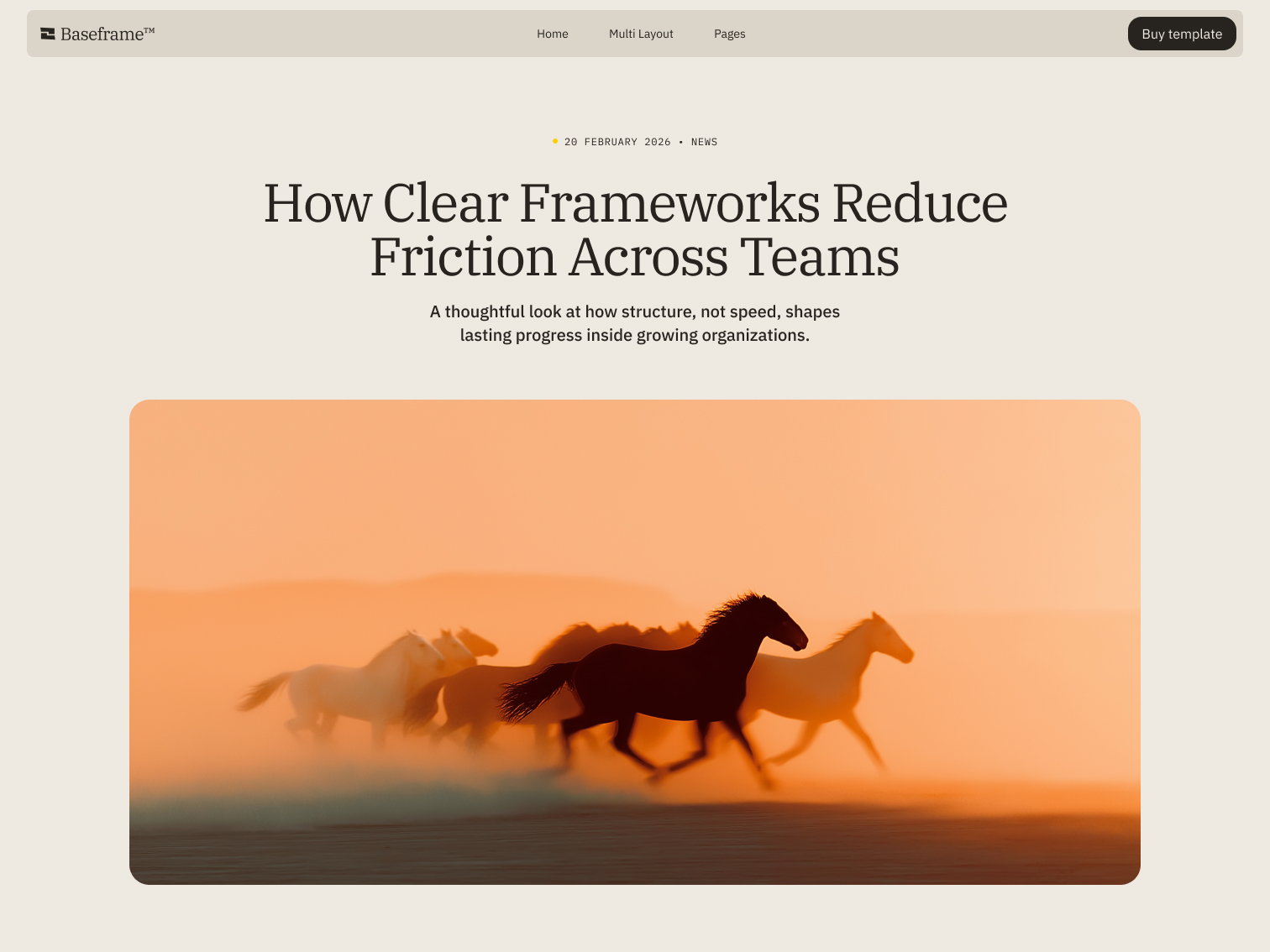


How Clear Frameworks Reduce Friction Across Teams
Freedom as momentum: how the Masculine Explorer archetype turns risk into brand trust.

The Masculine Explorer Archetype is the relentless seeker. He's the part of human nature that can't stay contained, even when containment is comfortable. He moves toward the edge. Then he tests it. Then he crosses it.
Where the feminine Explorer often follows curiosity with softness and flow, the masculine Explorer tends to move with force and will. He wants proof. He wants distance. He wants the story that only exists on the other side of risk.
In branding, this archetype isn't “outdoorsy” as an aesthetic. It's freedom as a philosophy. It signals independence, courage, self-reliance, and the willingness to trade certainty for discovery.
When the Masculine Explorer is done well, your audience feels momentum. They feel capability. They feel a quiet, addictive thought: I could do more than I am doing right now.
Origins and Frameworks: Fate, Fire, and Integration
The Wheel of Fortune: The Gamble of Change
In tarot, The Wheel of Fortune is often interpreted as cycles, change, destiny, and the turning of circumstances. The core idea is movement and unpredictability: what rises can fall, and what falls can rise. This fits the masculine Explorer because exploration is always a bet. You choose forward motion even when outcomes are unknown. Brand translation: you're not promising a guaranteed result. You're inviting people into a meaningful risk, telling them the world is larger than their routine.
Temperance: The Explorer's Maturity
Temperance is commonly associated with balance, patience, moderation, and integration, the reminder that experience becomes wisdom only when it's metabolised. This matters because the Explorer has a shadow. Without Temperance, exploration becomes escapism. Constant motion becomes avoidance. More horizons become less meaning. Brand translation: the Explorer doesn't only chase novelty. He learns. He integrates. He returns changed.
Sagittarius as a Symbol of Outward Expansion
Sagittarius is often framed as the zodiac's wide-horizon energy, linked with exploration, truth-seeking, and expansive drive. Even treated as metaphor rather than belief, it's a useful creative lens for brand personality and tone.
Cultural Expressions: Three Masculine Explorer Faces
Ernest Shackleton (endurance over ego): best known for his Antarctic expeditions, especially the Endurance expedition, which became famous as a story of perseverance and survival. He represents a key Explorer truth: the most compelling adventures aren't about the summit photo, they're about grit, leadership, and staying alive when the plan collapses. A Masculine Explorer brand earns trust by showing competence, not just ambition.
Anthony Bourdain (curiosity with teeth): helped popularise modern “foodie” culture through books and television, but his deeper impact was cultural, using food as a doorway into human stories, local realities, and nuance. His Explorer energy wasn't about collecting stamps in a passport. It was about getting close enough to understand. The Explorer can be brave in a quieter way: crossing borders socially, emotionally, and intellectually, not only physically.
Richard Branson (risk as a lifestyle strategy): the Explorer translated into business, representing the archetype's appetite for experimentation, bold bets, and the belief that learning happens in motion. Your brand can feel exploratory without being rugged. It can be innovative, playful, and daring in how it builds, not only where it travels.
Sensory and Aesthetic Mapping: The Explorer's World
The Masculine Explorer is cinematic, rugged, and high contrast. It feels like oxygen in the lungs.
Sight
Mountain peaks, star-filled skies, rugged terrain
Strong silhouettes, harsh light, weathered surfaces
Utilitarian materials and honest textures
Photography that feels earned, not posed
Sound
The crack of ice, wind that steals your breath, boots on gravel, a compass clicking into place
Touch
Rope and canvas, cold metal carabiners, rough leather and worn tools, grit under fingernails
Smell
Pine resin, diesel, woodsmoke, rain on rock
Feeling
Momentum, exhilaration, self-reliance, “I can handle it.”
Brand Applications: What the Masculine Explorer Looks Like in Practice
1. Positioning: Freedom Is the Product
Explorer brands often win when they sell liberation, not features. Good positioning questions: what does your customer escape when they choose you? What capability do they gain? What boundary do you help them cross? This works for outdoor brands, yes, but also for tech, education, automotive, hospitality, wellness, and even B2B services that help people move faster, wider, and with less dependence.
2. Messaging: Challenge, Clarity, Confidence
The Explorer voice is direct and energetic. Not hype. Not macho. Confident. Clear verbs, specific outcomes, minimal fluff, language that respects competence. A quick test: does your copy sound like a poster, or does it sound like a guide who's actually done the thing?
3. Visual Identity: Utility With Character
Explorer visual identity often leans into strong typography and clear hierarchy, high-contrast imagery with real weather and real movement, practical layouts that prioritise scannability, and textures that feel physical, not decorative. The detail that makes it premium isn't polish. It's intentionality.
4. Experience: Make Customers Feel Capable
Explorer brands should reduce friction. If you're selling freedom, the experience can't feel complicated: fast onboarding, simple choices, clarity on what happens next, tools that make the user feel prepared.
Brand Examples: Three Lanes of Explorer Energy
The North Face (extremes and capability): centres the idea of gear as a bridge between humans and harsh environments. The brand story is about preparedness and performance, not fantasy.
Nat Geo Expeditions (discovery with a narrative lens): the Explorer through meaning, education, and guided immersion, where adventure becomes story.
Garmin (tools for precision in the wild): built around instruments, maps, data, location, and performance, tools that help you move with confidence.
Common Pitfalls (and How to Avoid Them)
“Adventure aesthetic” without a point of view: photos of mountains aren't a brand. Fix: define what your version of freedom is and who it's for.
Reckless energy that feels unsafe: the Explorer should feel daring, not careless. Fix: show competence, preparation, and respect for limits.
Constant novelty, no integration: if everything is new, nothing is meaningful. Fix: bring in Temperance. Show what the journey changes in someone over time.
Does your brand challenge the edges of possibility, or does it keep people comfortable? If you want your brand to feel like momentum, self-reliance, and honest freedom, the Masculine Explorer Archetype may be the right lens. A useful next step is to look at your website and ask: do we make people feel capable, or do we make them feel like spectators?
If you haven't already, it's worth reading the feminine expression of this same archetype. The difference in how each one moves toward freedom is sharper than you'd expect.
Get in touch if you want help translating this archetype into a visual identity system and a brand story that feels grounded.