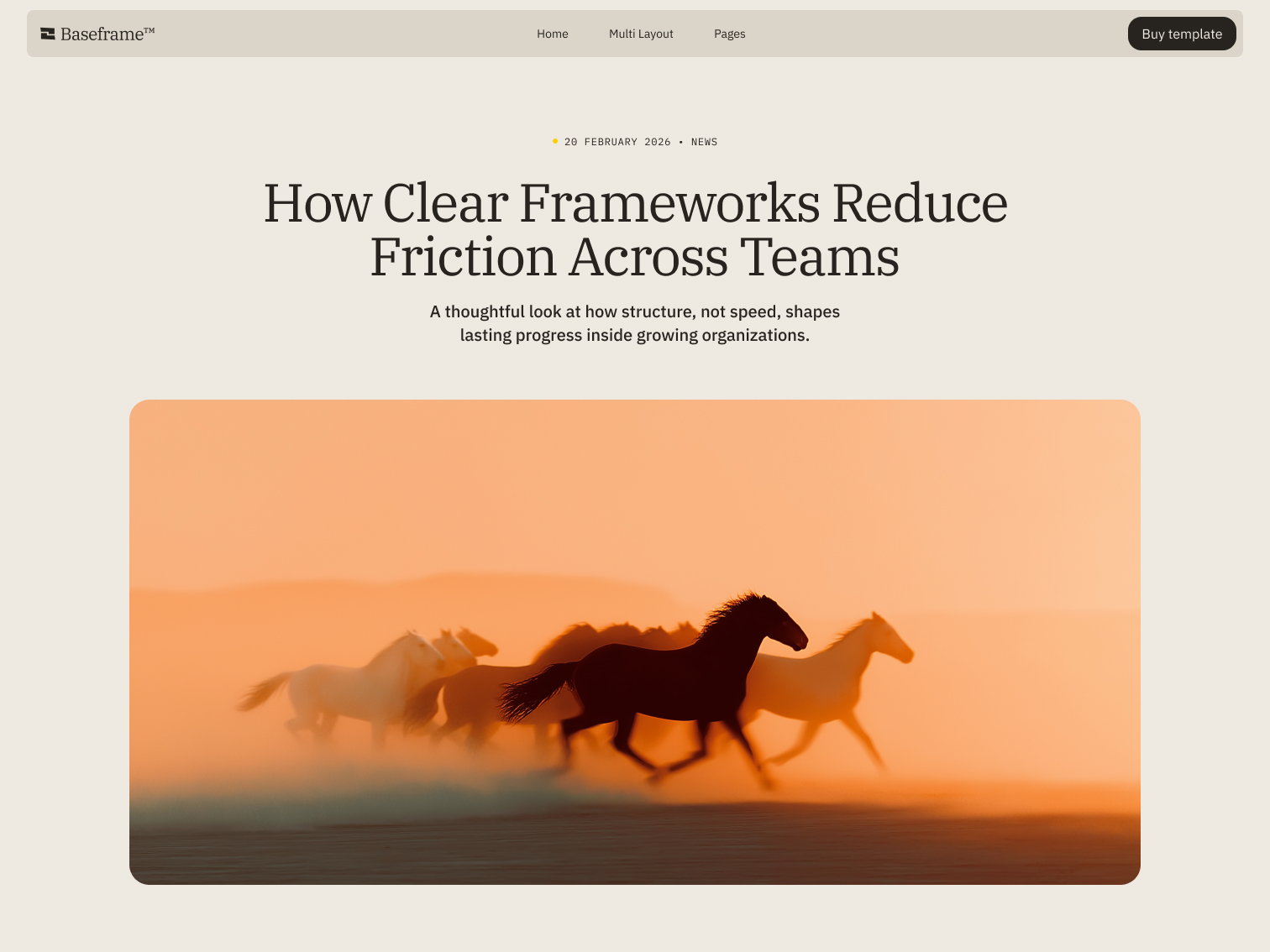



How Clear Frameworks Reduce Friction Across Teams
Command as legacy: how the masculine Ruler archetype shows up in art, aesthetics, and brand strategy.

The Ruler archetype isn't about power for its own sake. It's the responsibility that comes with setting the standard other people end up measuring themselves against. In its masculine expression, that authority shows up as decisiveness and presence: less about being liked, more about being trusted to hold the line. Here's where it comes from, what it looks and feels like, and which brands are already built on it.
Where the Ruler Comes From: Myth, Psychology, and a Little Bit of Astrology
This archetype runs through history's most recognizable leadership figures: King Arthur, Alexander the Great, and the CEOs who get compared to them centuries later. What connects them isn't conquest so much as order, the ability to create stability inside whatever domain they're responsible for.
Astrology and tarot chart similar ground. Leo, ruled by the Sun, carries the Ruler's presence and its instinct to command a room without asking permission first. The Emperor, its tarot counterpart, represents structure and authority: the discipline required to keep something standing, not just build it.
None of these systems, psychology, mythology, astrology, exist here for their own sake. They're lenses. A brand that understands which archetype it's built on tells a story people recognize before they can explain why, which is usually the difference between a brand that sets the standard and one that's still chasing it.
The Masculine Ruler in Art and History
This version of the Ruler shows up in figures whose ambition reshaped the world around them, for better and for worse. Napoleon Bonaparte expanded an empire through military and political strategy few could match, and his downfall came from the same overreach that built his rise. Steve Jobs ran Apple with a level of control over every detail that most executives would find suffocating, and that discipline is a large part of why the brand still feels singular decades later. Neither led by consensus. They led by conviction, and built structures strong enough to survive their own certainty.
What It Looks, Feels, and Sounds Like
Sight: bold geometric shapes, strong symmetrical lines, crowns and thrones, architecture built to be looked up at
Touch: stone, leather, metal, materials that feel permanent rather than trendy
Sound: a commanding voice, a firm handshake, the steady rhythm of a ceremonial drum
Smell: sandalwood, cedar, musk, something grounded and unhurried
Feeling: stability, the specific confidence of being led by someone who's already thought three steps ahead
Brands Already Building on This Archetype
Amazon (infrastructure as authority): Amazon didn't just enter e-commerce. It built the infrastructure other companies now depend on to compete inside it. That's the difference between participating in an industry and setting its terms.
Boeing (precision under pressure): Boeing's authority comes from consequence: aircraft engineering leaves no room for approximate. The brand's entire credibility rests on precision holding up in the moments that matter most.
BlackRock (discipline at scale): BlackRock manages more capital than most nations' GDP, and its brand runs almost entirely on discipline rather than charisma. The trust comes from consistency, not spectacle.
Where Does Your Brand Fit?
Maybe the Ruler is your brand's underlying pattern, especially if what you're building runs on authority, structure, or being the standard other people measure themselves against. Maybe it's something else entirely. Either way, naming it is the first step toward building something people recognize without needing to be told what it means.
Get in touch and we'll help you figure out which one is yours.