





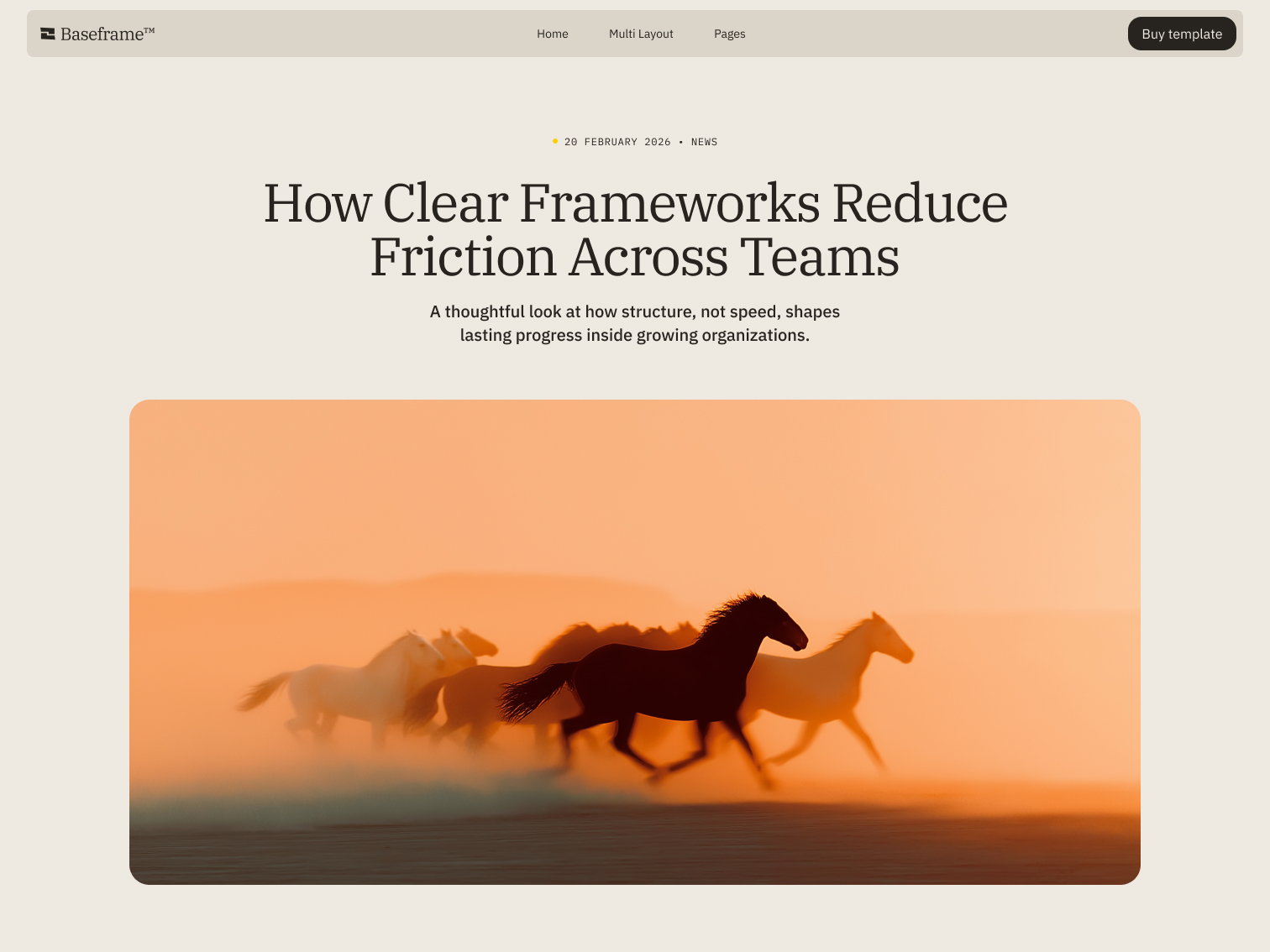





How Clear Frameworks Reduce Friction Across Teams
Command without noise: how the masculine Hero archetype shows up in myth, aesthetics, and brand strategy.

Most people already recognize this version of the Hero. It's built on decisive action, forward motion, and a refusal to sit still while a problem needs solving. It's also the version brands reach for most often, sometimes without giving it much thought. Here's where it comes from, what it looks and feels like, and which brands are already using it well.
Where the Hero Comes From: Myth, Psychology, and a Little Bit of Astrology
Carl Jung named the Hero as one of the archetypes running underneath human storytelling: the drive to face a threat, prove capability, and come out the other side stronger. Heracles, Thor, Superman, James Bond. Different eras, same shape. Strip away the costume and it's the same story on repeat: obstacle, action, victory.
Astrology and tarot chart similar ground. Aries carries the Hero's initiating energy, the instinct to move first and ask questions later. The Emperor, its tarot counterpart, represents structure and decisive rule. In its masculine expression, the Hero isn't especially interested in reflection. It builds, defends, and conquers, in that order.
None of these systems, psychology, mythology, astrology, exist here for their own sake. They're lenses. A brand that understands which archetype it's built on tells a story people recognize before they can explain why, which is usually the difference between a brand people trust and one they scroll past.
The Masculine Hero in Art and History
This version of the Hero has a long visual history: Alexander the Great mid-campaign, Michelangelo's David standing his ground before the fight has even started, Henry Ford and Steve Jobs building entire industries out of conviction. None of them got there by accident. Their strength was calculated and relentless, built one decision at a time.
What It Looks, Feels, and Sounds Like
Sight: sharp angles, bold type, contrast that doesn't apologize, black, red, deep navy, metal
Touch: steel, leather, stone, textures that don't give
Sound: a war horn, a hammer strike, a voice that commands a room without raising itself
Smell: smoked wood, musk, citrus with an edge
Feeling: momentum, impact, conviction that isn't up for debate
Brands Already Building on This Archetype
Nike (just do it): Nike runs almost entirely on this archetype. The swoosh doesn't explain itself, the ads rarely need dialogue, and “Just Do It” works precisely because it isn't asking. It's an instruction.
Rolex (built to last): Rolex trades on precision and time itself: engineering that doesn't cut corners, a heritage it doesn't need to inflate, and a price point that does some of the talking on its own. The brand isn't chasing relevance. It's already assumed it.
Harley-Davidson (the road warrior): Harley-Davidson sells rebellion with an engine attached. The logo is blunt, the sound is unmistakable from a block away, and the whole brand runs on one idea: the open road answers to no one.
What Heroic Story Does Your Brand Tell?
Maybe the Hero is your brand's underlying pattern. Maybe it's something else entirely. Either way, naming it is the first step toward building something people recognize without needing to be told what it means.
If you haven't already, it's worth reading the feminine expression of this same archetype. The differences are sharper than you'd expect.
Get in touch and we'll help you figure out which one is yours.