

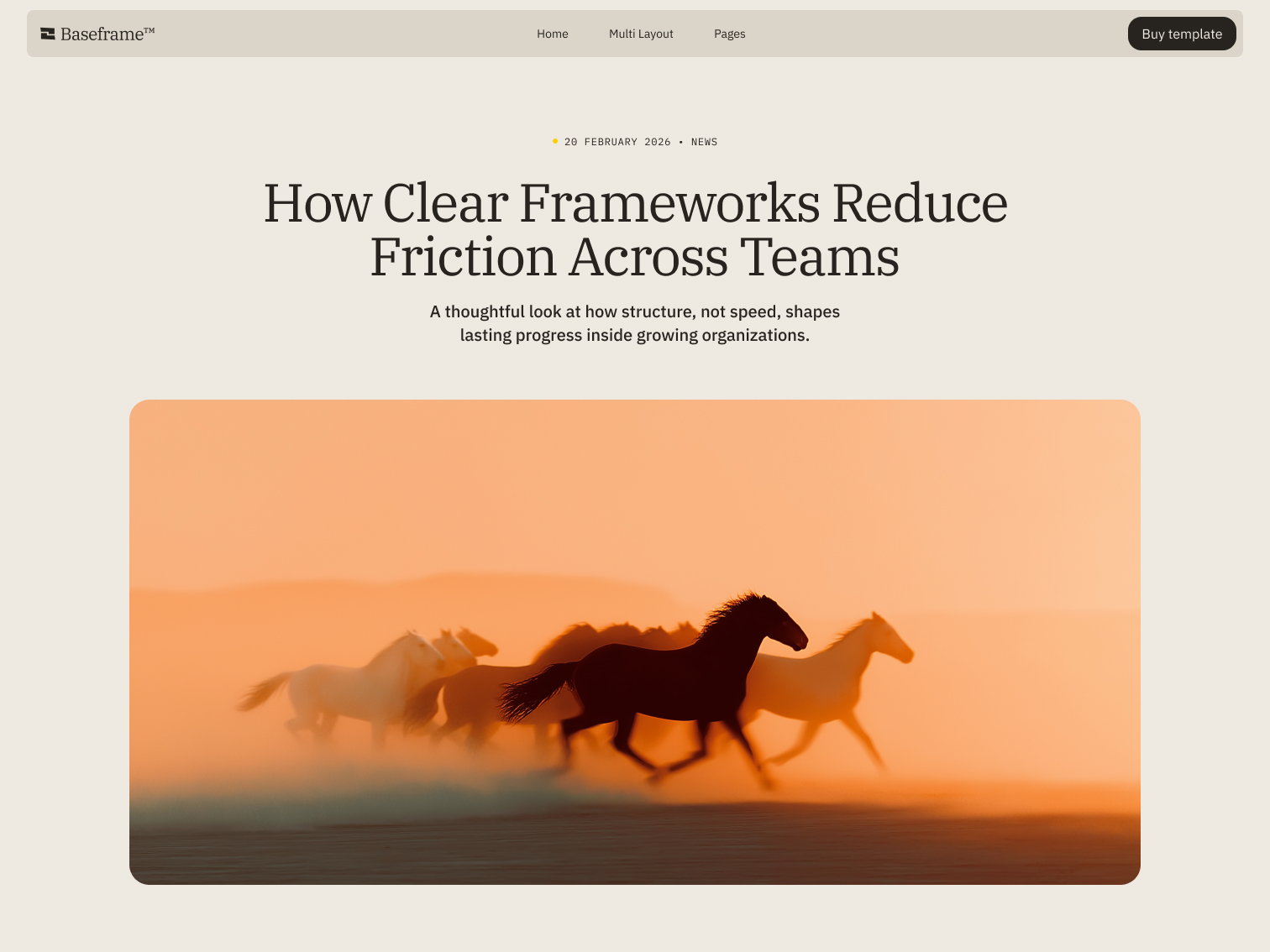



How Clear Frameworks Reduce Friction Across Teams
Wisdom as guidance: how the masculine Sage archetype shows up in art, aesthetics, and brand strategy.

The Sage archetype isn't about knowing everything. It's about seeing clearly enough to help someone else see too. In its masculine expression, that clarity comes through calm authority: guidance offered with the confidence of someone who's already done the work. Here's where it comes from, what it looks and feels like, and which brands are already built on it.
Where the Sage Comes From: Myth, Psychology, and a Little Bit of Astrology
Carl Jung placed the Sage among the archetypes built around the search for truth and clarity. Myth carries the same instinct through figures like Merlin, whose counsel shaped not just King Arthur's decisions but the kingdom itself.
Astrology and tarot chart similar ground. Sagittarius, ruled by Jupiter, carries the Sage's hunger for expansion and philosophical perspective. The Hermit, its tarot counterpart, represents solitude used deliberately: retreating not to disappear, but to return with something worth sharing.
None of these systems, psychology, mythology, astrology, exist here for their own sake. They're lenses. A brand that understands which archetype it's built on tells a story people recognize before they can explain why, which is usually the difference between a brand people trust and one they scroll past.
The Masculine Sage in Art and History
This version of the Sage shows up in men who turned observation into lasting frameworks. Socrates built an entire method of thinking around admitting what he didn't know, which turned out to be more useful than most people's certainty. Confucius's teachings on ethics and governance shaped how an entire civilization thought about order for over two thousand years. Malcolm Gladwell built a career on making complex research legible to people who'd never read the original studies. None of them were sages because they had all the answers. They were sages because they knew how to ask better questions.
What It Looks, Feels, and Sounds Like
Sight: charcoal, deep navy, forest green, clean and understated design, typography that feels sharp and precise
Touch: polished stone, leather-bound journals, a well-worn wooden desk
Sound: the measured cadence of a thoughtful conversation, reflective ambient music that encourages focus
Smell: cedarwood, tobacco, the particular scent of a library full of books
Feeling: quiet reflection, the trust that comes from being guided by someone who's actually done the work
Brands Already Building on This Archetype
TED (insight for a global audience): brings wisdom and perspective to a global audience through talks built to challenge how people think, not just what they know.
The Art of Manliness (intellectual curiosity, practical wisdom): blends philosophy, history, and self-development into insight men can actually use, not just read about.
The Calm Collective (clarity through reflection): a podcast and brand built around guiding people through difficulty with thoughtful perspective rather than easy answers.
Where Does Your Brand Fit?
Maybe the Sage is your brand's underlying pattern, especially if what you're building runs on research, depth, or being the source people actually trust to get something right. Maybe it's something else entirely. Either way, naming it is the first step toward building something people recognize without needing to be told what it means.
If you haven't already, it's worth reading the feminine expression of this same archetype. The difference in how each one guides is sharper than you'd expect.
Get in touch and we'll help you figure out which one is yours.