

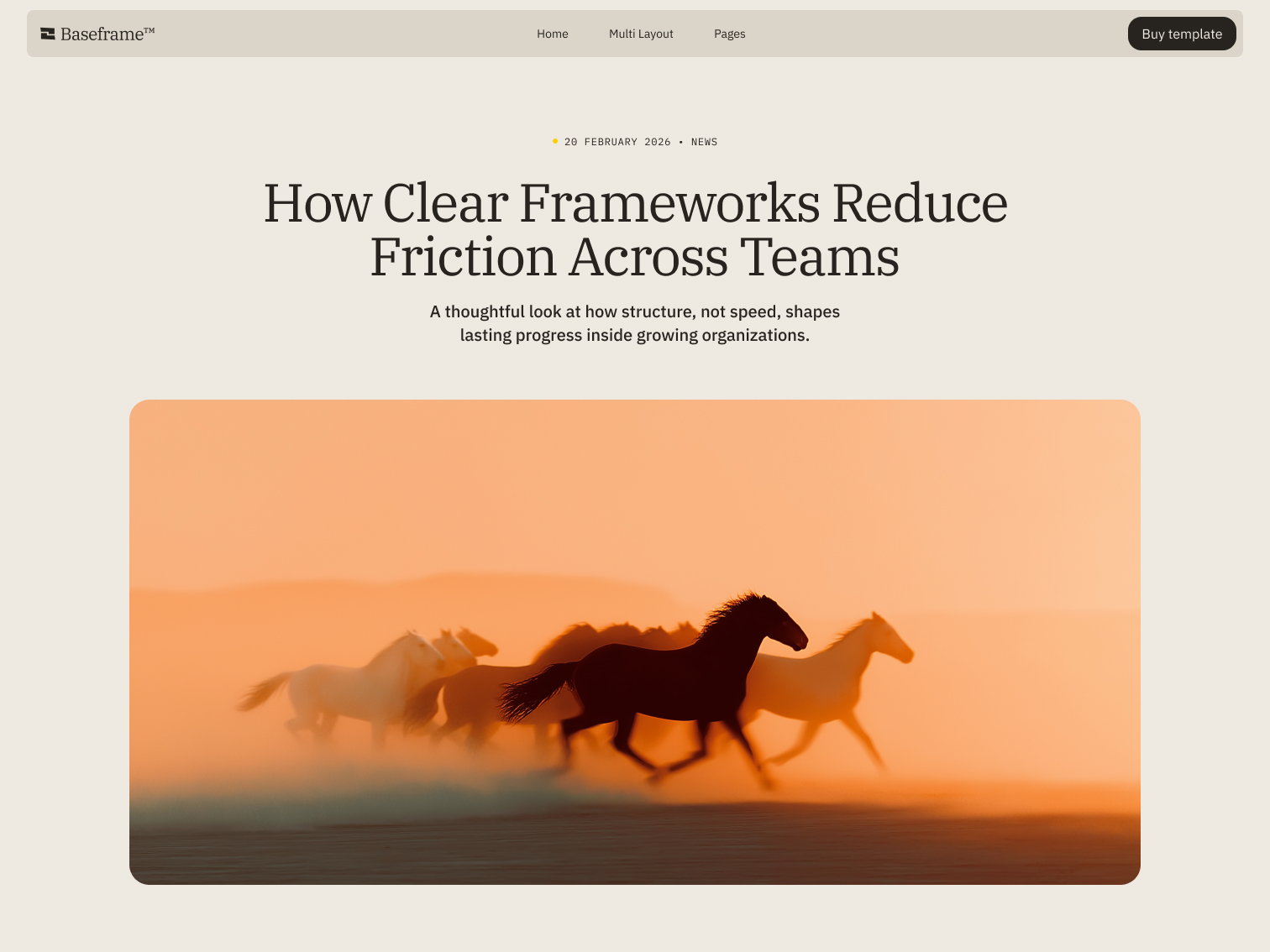




How Clear Frameworks Reduce Friction Across Teams
Grace as authority: how the feminine Ruler archetype shows up in art, aesthetics, and brand strategy.

The Ruler archetype isn't about power for its own sake. It's the responsibility that comes with setting the standard other people end up measuring themselves against. In its feminine expression, that authority shows up through emotional intelligence and strategic vision rather than force: command that doesn't need to raise its voice. Here's where it comes from, what it looks and feels like, and which brands are already built on it.
Where the Ruler Comes From: Myth, Psychology, and a Little Bit of Astrology
Carl Jung rooted the Ruler in a basic human need: order, control, stability. In its feminine expression, that need isn't about dominance so much as legacy, something built to last past the person who built it. Cleopatra and Queen Elizabeth I both ruled through a combination most leaders never fully master: intelligence paired with the read on a room that keeps intelligence from tipping into arrogance.
Astrology and tarot chart similar ground. Leo, ruled by the Sun, carries the Ruler's presence and its natural claim on a room. The Empress, its tarot counterpart, represents abundance and governance that creates rather than just controls.
None of these systems, psychology, mythology, astrology, exist here for their own sake. They're lenses. A brand that understands which archetype it's built on tells a story people recognize before they can explain why, which is usually the difference between a brand that sets the standard and one that's still chasing it.
The Feminine Ruler in Art and History
This version of the Ruler shows up in leaders whose authority didn't rely on intimidation to hold. Queen Victoria's reign spanned six decades built on stability more than spectacle. Catherine the Great expanded an empire through diplomacy and cultural investment as much as through force, understanding that influence outlasts conquest. Neither of them needed to raise their voice to be obeyed. The authority was already assumed.
What It Looks, Feels, and Sounds Like
Sight: symmetrical composition, clean elegant lines, crowns and crests without excess
Touch: velvet, satin, gold leaf, polished marble, materials that suggest permanence
Sound: a warm, confident voice, the quiet rustle of silk, the specific hush a room goes into around real authority
Smell: amber, jasmine, rose, refined without trying to prove it
Feeling: the calm of being in capable hands
Brands Already Building on This Archetype
Chanel (authority through consistency): Chanel has run on the same design vision for over a century. The interlocking C, the tailoring, the restraint: none of it needed to be reinvented to stay relevant, which is its own kind of authority.
The Ritz-Carlton (control as hospitality): The Ritz-Carlton's reputation rests on consistency executed at a level most hospitality brands can't sustain. Every detail is curated on purpose, which is what makes the experience feel effortless from the guest's side.
Oprah / OWN (influence built on trust): Oprah built a media presence on a combination that rarely coexists at scale: genuine empathy and undeniable authority. OWN runs on the same trust she spent decades earning before the network existed.
Where Does Your Brand Fit?
Maybe the Ruler is your brand's underlying pattern, especially if what you're building runs on authority, consistency, or being the standard other brands measure themselves against. Maybe it's something else entirely. Either way, naming it is the first step toward building something people recognize without needing to be told what it means.
If you haven't already, it's worth reading the masculine expression of this same archetype. The difference in how each one commands a room is sharper than you'd expect.
Get in touch and we'll help you figure out which one is yours.